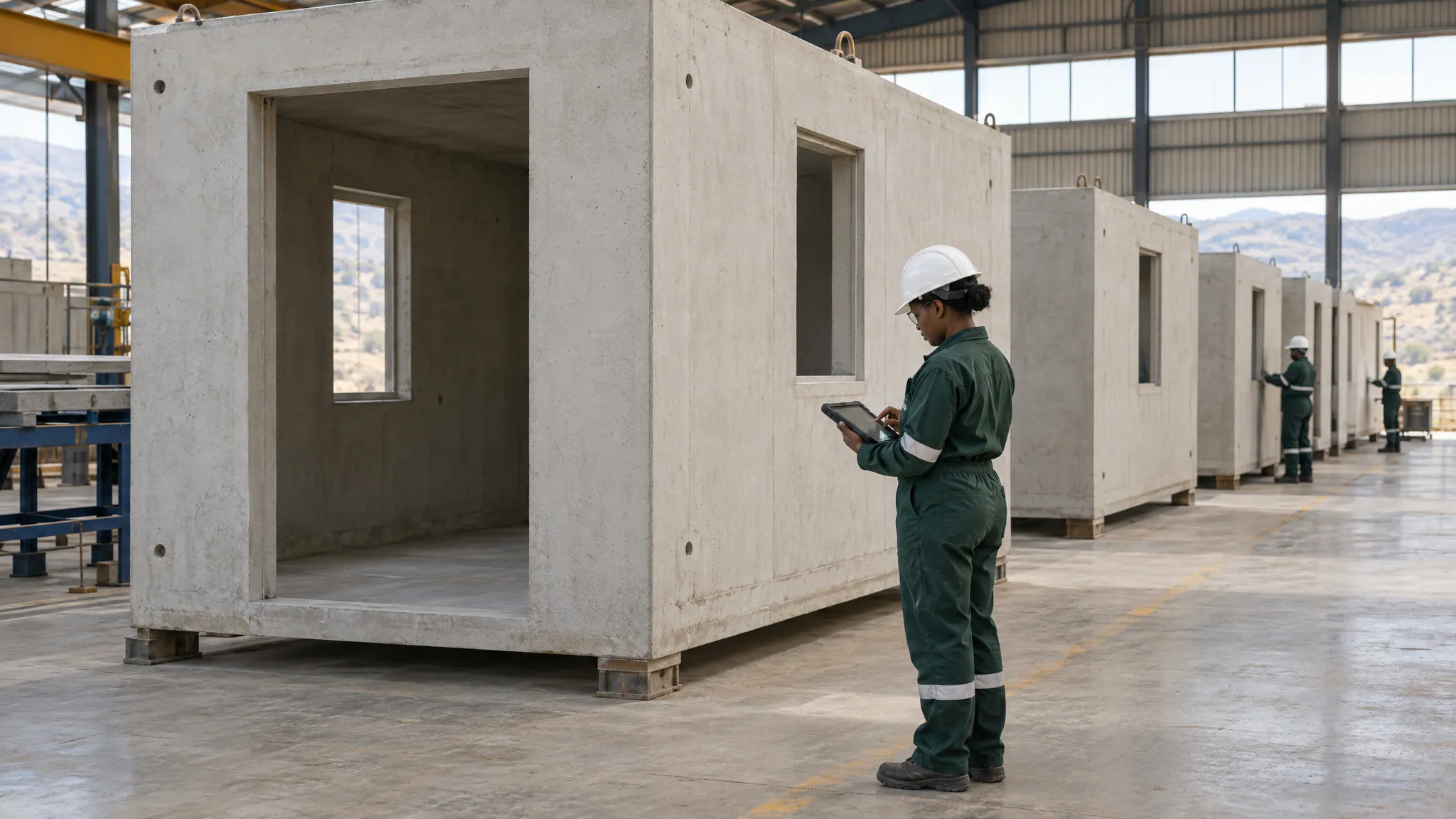
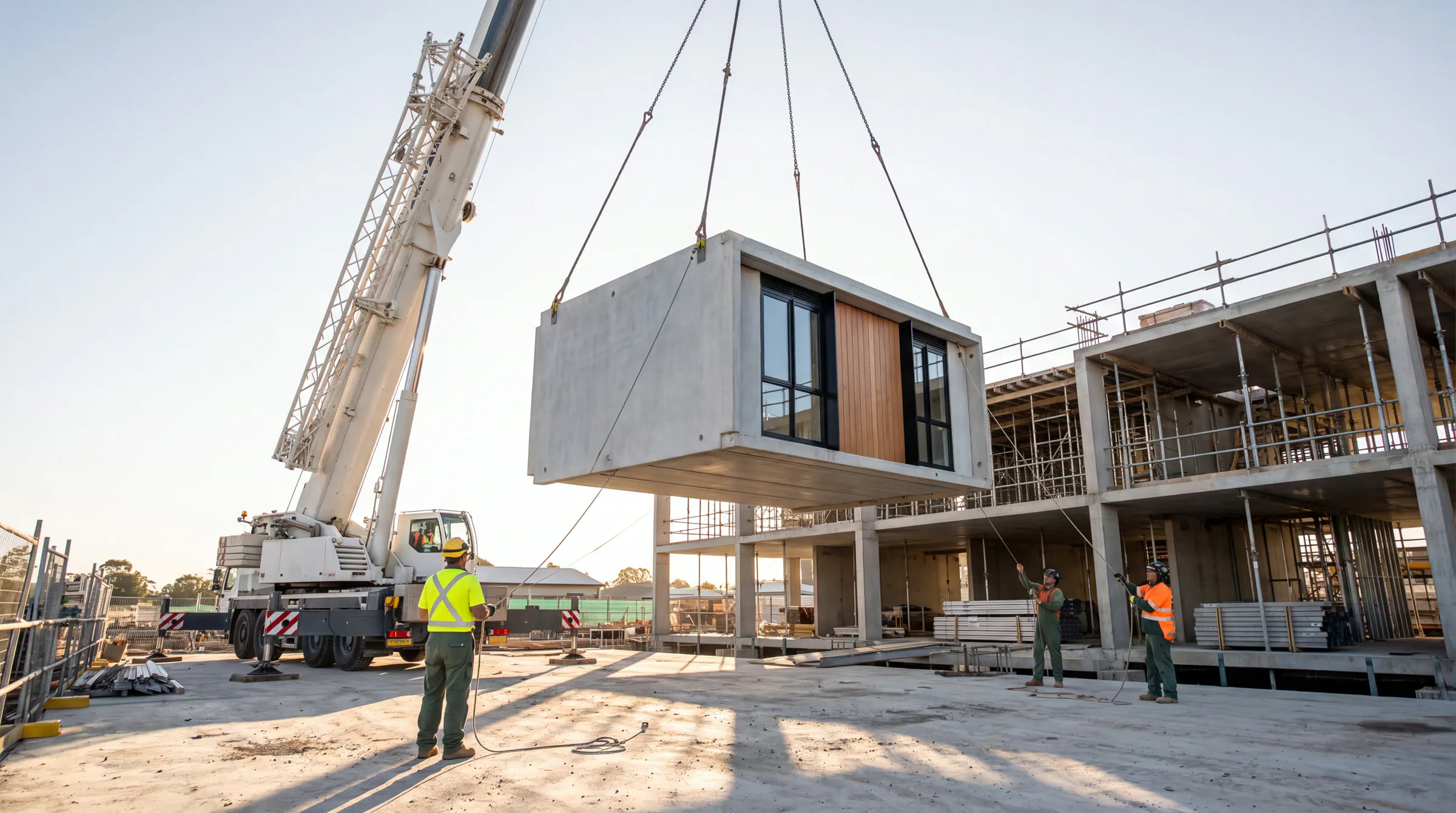
Industrialised construction is usually sold on speed. Speed is the visible part, but it is not where most of the value sits. It is a symptom of something more useful: the work has been moved somewhere it can be controlled. Once that happens, several different kinds of value follow, and they are easy to confuse.
So it is worth separating them. Below are four places where off-site construction can take cost and risk out of a development, how each mechanism works, and what the evidence says. We have not yet built a project, so where we refer to results, they are other people's, and we say so.
Four places the value sits
- Calendar
- Value in time
- Risk
- Value in what does not happen
- Materials
- Value in material never bought
- Life
- Value spread over decades
Speed is not the value. It is the symptom of work that has moved somewhere it can be controlled.
01
The calendar: value in time, not in the build
A shorter programme does not necessarily make a building cheaper to make. It makes it cheaper to own while it is being made. Every month under construction carries financing, insurance, site establishment, security and professional fees against a building that is not yet earning.

That cost has risen. On 23 September 2026 the Reserve Bank raised the repo rate to 7.25%, taking prime to 10.75%. Every month of programme now carries more interest than it did a year ago.
- 7.25%
- Repo rate after 23 September 2026
- 10.75%
- Prime lending rate
Source: South African Reserve Bank MPC statement, 23 September 2026
How much time does volumetric construction save? Singapore's Building and Construction Authority reports manpower and time savings of up to 40% on prefabricated prefinished volumetric construction (PPVC) projects. A 2019 McKinsey study found schedules 20% to 50% shorter where modular is done well. In our own pre-production comparison for a room of about 20 m², structural site time falls from roughly 16 days to roughly eight. That is an estimate, and we will measure it on our first projects before we publish it as a result.
Structural site time for a room of about 20 m²
- Conventional≈16 days
- Volumetric≈8 days
Pre-production estimate. To be measured on our first projects before it is published as a result.
Benchmarks, not Precast Africa results
- Up to 40%
- Manpower and time savings on PPVC projects, Singapore BCA
- 20–50%
- Shorter schedules where modular is done well, McKinsey 2019
02
The risk register: value in what does not happen
When the structure is cast indoors, weather stops being a programme risk for that part of the building. Quality stops depending on which crew arrived. Sequencing on site becomes placement and connection rather than construction.
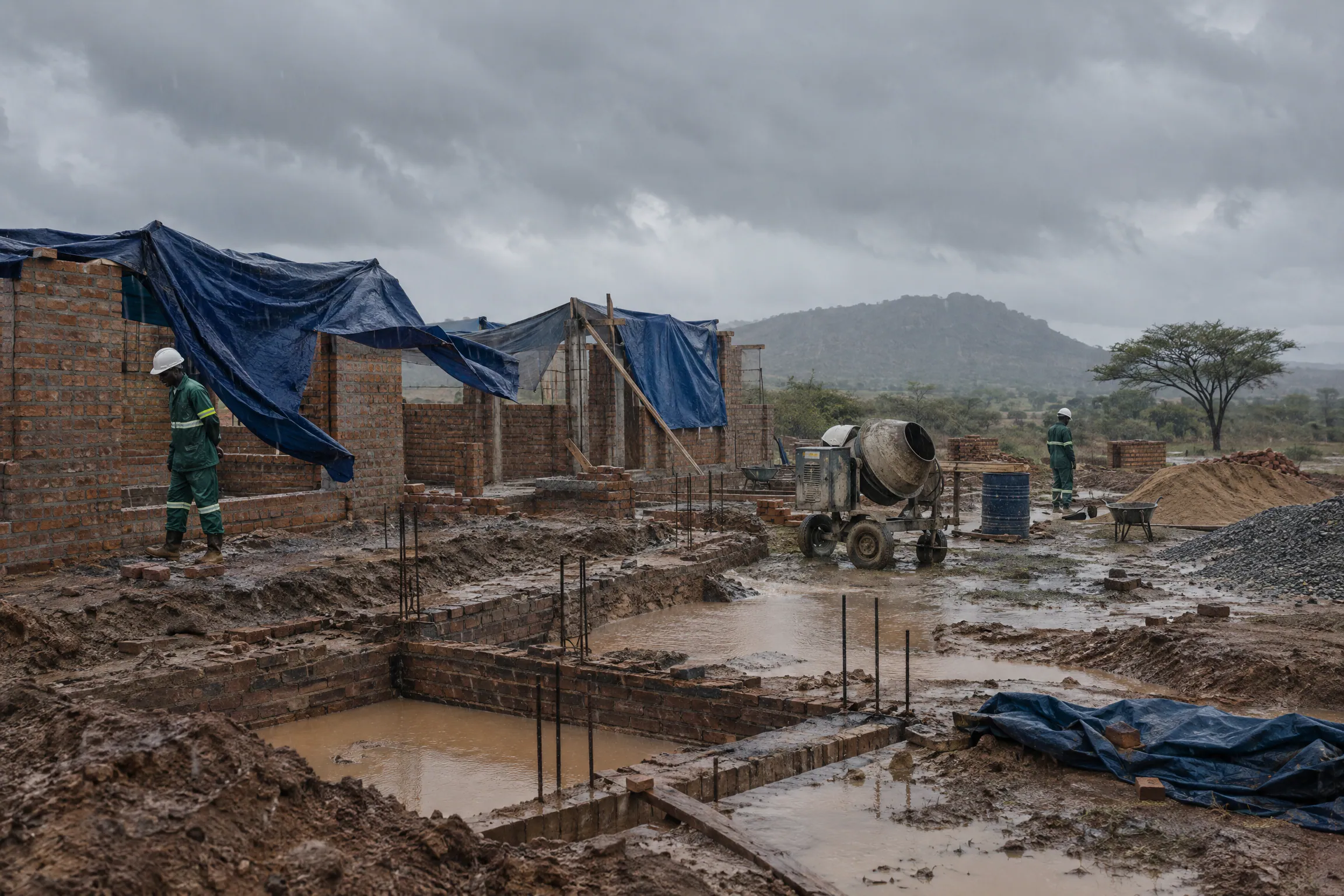
Most of the financial effect is in what does not occur: fewer weather delays, less rework, a shorter site establishment, less disruption to neighbours. None of that appears as a line item, which is why it is easy to leave out of a comparison. The costs avoided are invisible in a way the costs incurred never are.
The caveat matters. The same McKinsey research found that poorly executed modular projects can cost more, not less. Off-site construction moves risk into the factory. It only reduces it if the factory, the design freeze and the site interface are managed with discipline.
03
The materials bill: value in material never bought
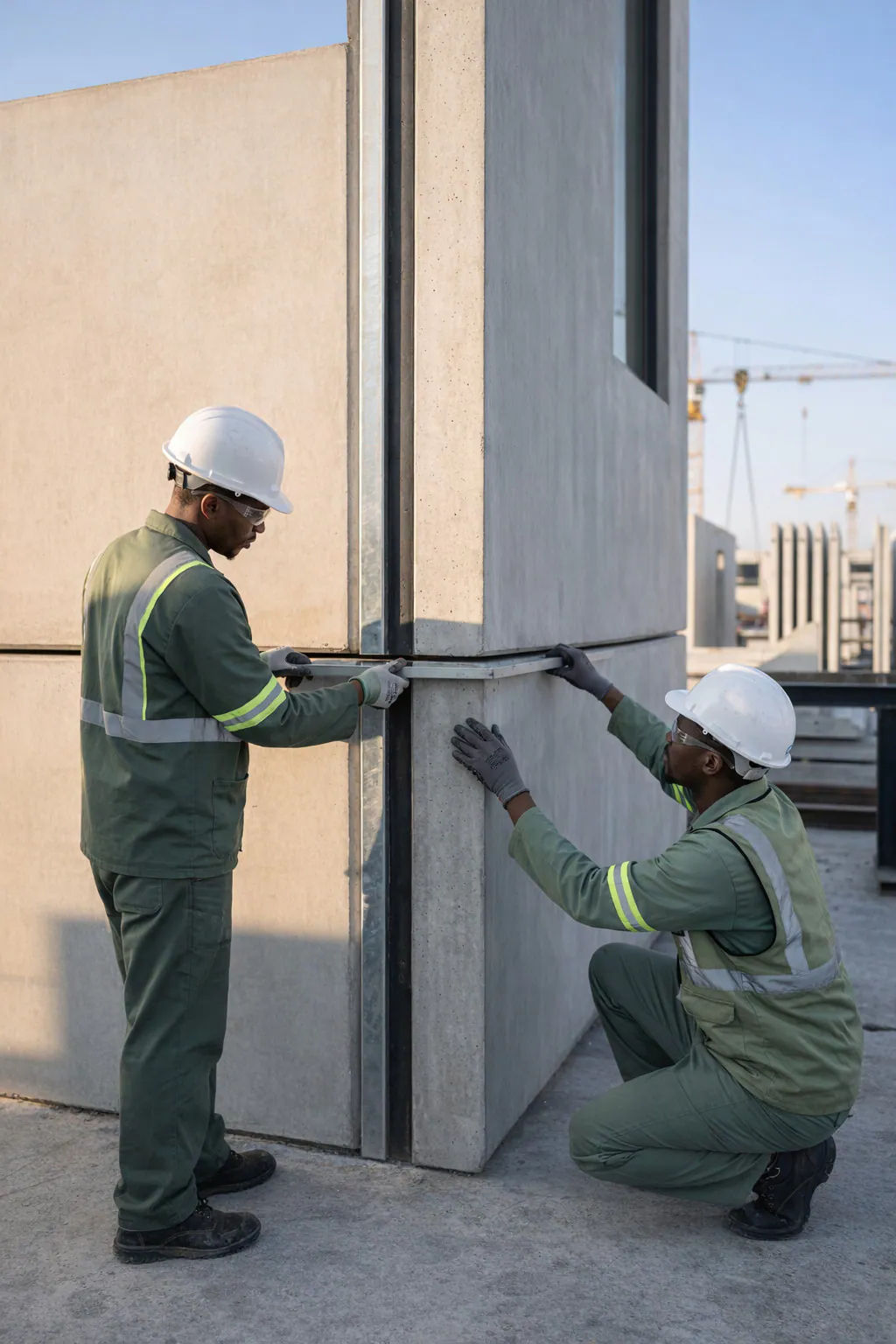
Waste is usually filed as an environmental issue, which lets it escape the cost conversation. It should not. Waste is material that was specified, bought, transported, stored, damaged and then paid for again to be taken away.
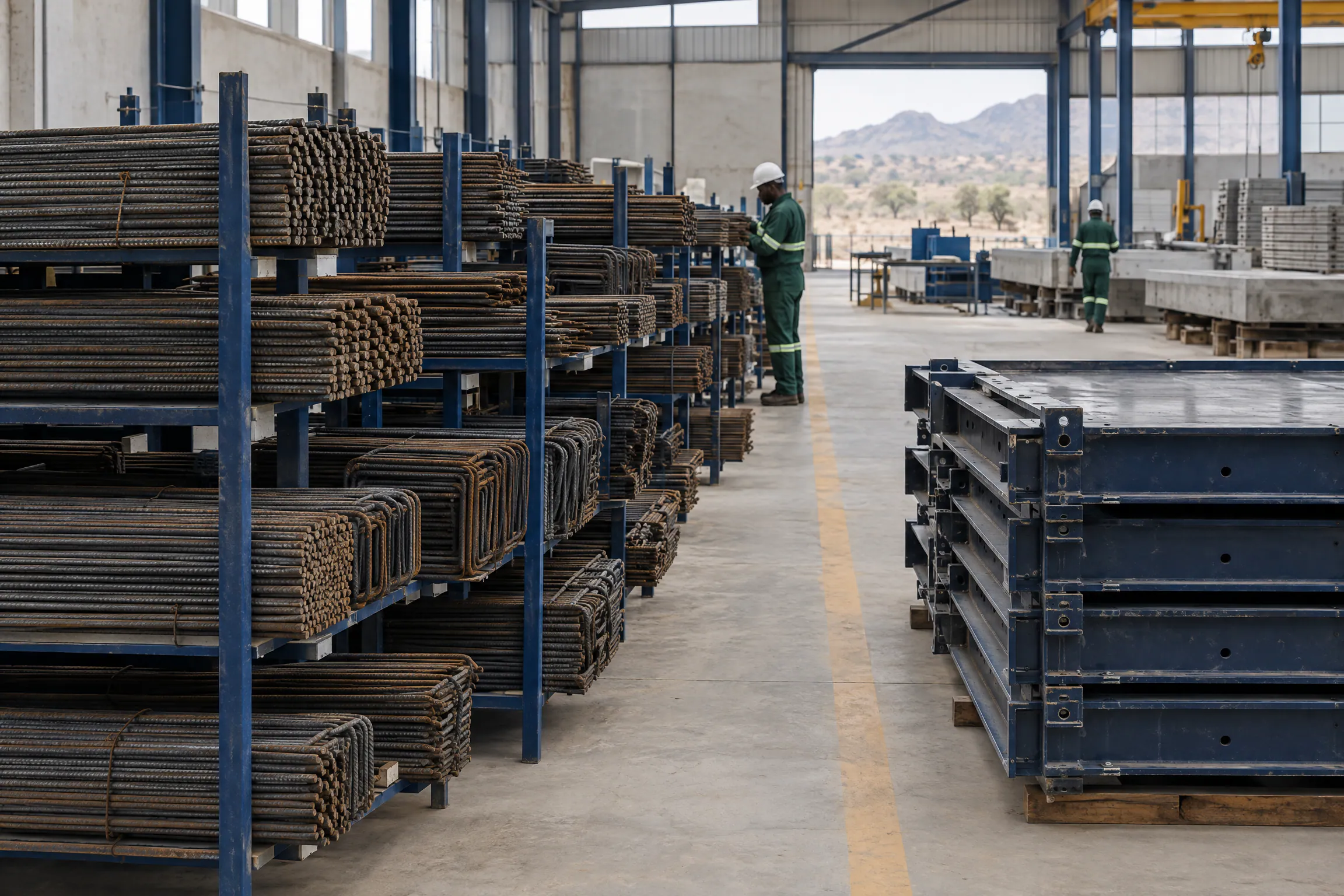
A factory reduces it at the source. Quantities are known before the pour because the module repeats, and permanent steel moulds replace timber formwork used and discarded job by job. Published research is more measured than marketing claims: a peer-reviewed analysis of 114 projects found prefabrication reduced construction waste by about 15%. We will measure our own waste from the first production run and publish it then.
Published research
- ≈15%
- Less construction waste with prefabrication, across 114 projects
Source: Peer-reviewed analysis of 114 projects, as cited in Precast Africa's 2026 business plan
04
The life of the building: value spread over decades
Capital cost is what a building costs to put up. Whole-life cost is what it costs to keep. A reinforced-concrete room cast in one piece, with openings formed rather than cut and no wall-to-roof joint, removes some of the places where buildings commonly begin to fail.

For anyone holding an asset rather than selling it, that is often the most important consideration. A public programme, an employer or a long-term landlord is buying decades of service, not a handover. We will state a design life for our modules only once our structural engineer has confirmed it in writing.
05
What these mechanisms are, and what they are not
None of the above is a quotation. What a specific scheme gains depends on its site, layout, storey count, finishes and programme. The honest answer to "what will it cost" is a priced proposal with assumptions and exclusions, not a figure on a web page. We do not claim that our modules cost less than conventional construction. Our case rests on programme, quality and certainty.
What the four mechanisms do tell you is where to look. If a comparison with conventional construction counts only the build cost, it measures the one place where industrialised construction has least to say, and misses the calendar, the risk, the materials and the decades that follow.
The lesson from elsewhere is a caution as well as a case. In the United Kingdom, several volumetric housing manufacturers failed in 2022 and 2023 after scaling ahead of their order books, and a parliamentary committee found cost claims in the sector that could not all be true. We intend to earn the case with evidence, one stage at a time.
Bronne
International figures are third-party benchmarks, not Precast Africa results. Precast Africa's own comparison is a pre-production estimate to be measured on its first projects. No cost saving is claimed. Images are artist's impressions.
- Singapore Building and Construction Authority, PPVC
- McKinsey & Company, 'Modular construction: From projects to products', June 2019
- South African Reserve Bank MPC statement, 23 September 2026 (via STBB)
- House of Lords Built Environment Committee, 'Modern methods of construction — what's gone wrong?', 2024
- Peer-reviewed analysis of construction waste across 114 projects, as cited in Precast Africa's 2026 business plan [citation to confirm before publishing]