For a growing share of the capital that funds housing in South Africa, ESG is no longer a section at the back of the annual report. It is a condition: a set of tests a development has to pass before money moves, and a set of numbers the lender expects to keep receiving afterwards.
That is awkward for construction, because a conventional site is one of the hardest places in the economy to evidence anything. Work is done outdoors, by a chain of subcontractors, in conditions that change by the hour, with materials measured by allowance and waste removed by the skip. A project built that way can be well run and still unable to produce a defensible number for what it emitted, wasted or paid to whom.
01
The argument is about measurability, not virtue
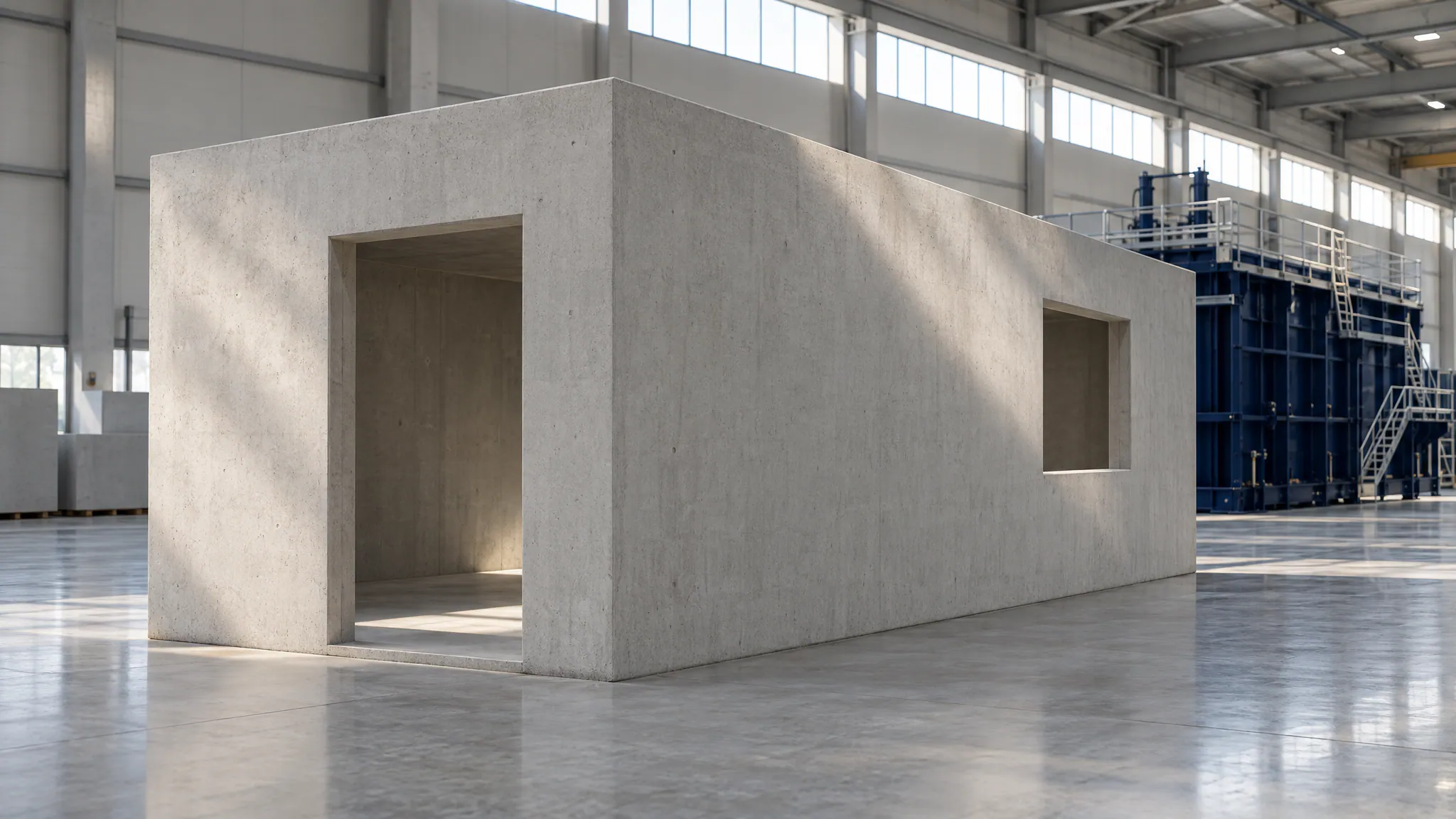
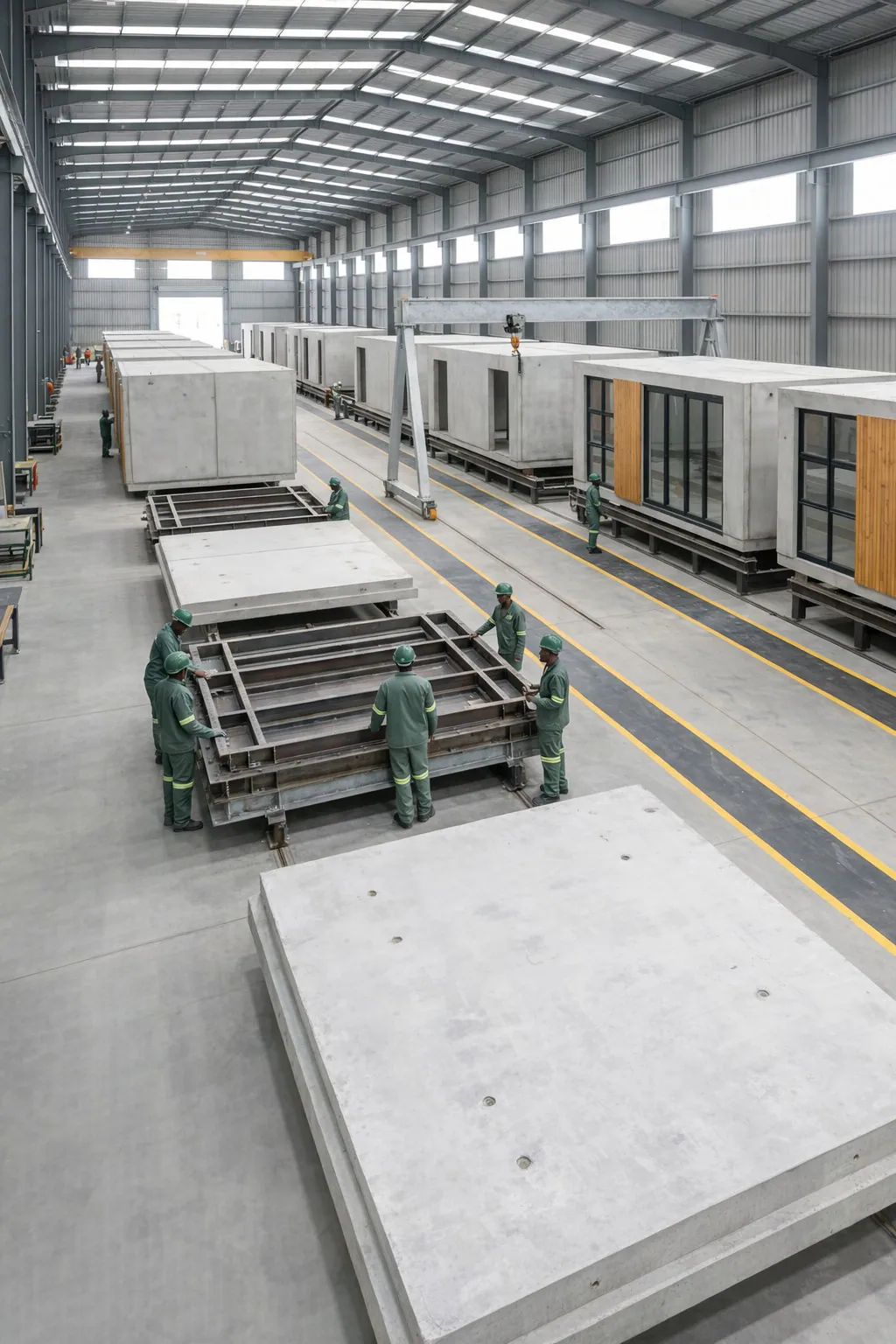
A factory is a place where inputs are batched, outputs are counted, the process repeats every cycle and one organisation is accountable for all of it. That is the same property that makes manufactured building more predictable to programme. A repeatable process is measurable almost by definition, and a measurable process is one whose ESG claims can be audited rather than asserted.
The ESG advantage of a factory is not only that it can waste less. It is that it can show what it did, module by module.
The three letters, in a production environment
What changes under each heading when the repeatable part of a building is manufactured rather than built in the open.
- E
Environmental
Material quantities are known before each pour, steel moulds replace timber formwork, and embodied carbon, water and energy can be attributed to a single repeatable module and improved against a measured baseline.
- S
Social
Casting, quality control and installation become year-round, indoor, teachable work. Local recruitment and training can be planned and reported rather than left to the site.
- G
Governance
One accountable party carries the module from the mould to the foundation, under one quality regime and one set of records, with stage gates that close before the next begins.
02
Environmental: honest about concrete
Precast concrete is not automatically low-carbon. Cement and reinforcing steel account for most of the embodied emissions in any concrete structure, and moving them into a factory does not change their chemistry. Anyone who tells a funder otherwise is asking to be caught out in due diligence.
What a factory does change is the ability to reduce those emissions deliberately and prove it. Because every module goes through the same operations, its materials can be counted exactly. That makes each improvement a measurable change to a known baseline: replacing part of the cement with supplementary materials such as fly ash or slag, sourcing reinforcing steel with a lower carbon footprint, tuning curing, and cutting off-cut waste.

The policy context is moving in the same direction. South Africa's carbon tax entered its second phase in 2026 at R308 per tonne of CO2-equivalent, with the phase running to 2030. A new edition of SANS 10400-XA, the national standard for energy use in buildings, was published in 2026. Both will make carbon and energy data part of the commercial conversation, not only the reporting one.
- R308
- Carbon tax per tonne CO2-equivalent, 2026 (phase two runs to 2030)
- 2026
- New edition of SANS 10400-XA, energy use in buildings
Source: Anthesis, South African carbon tax update 2026; SABS
03
Social: the work moves indoors, and becomes teachable
The social side of manufactured building is often misread as a threat to employment. The labour does not disappear; it relocates and changes character. Casting, quality control, rigging and installation become year-round roles under a roof, on a fixed cycle, which makes them trainable in a way a rotating site workforce is not.
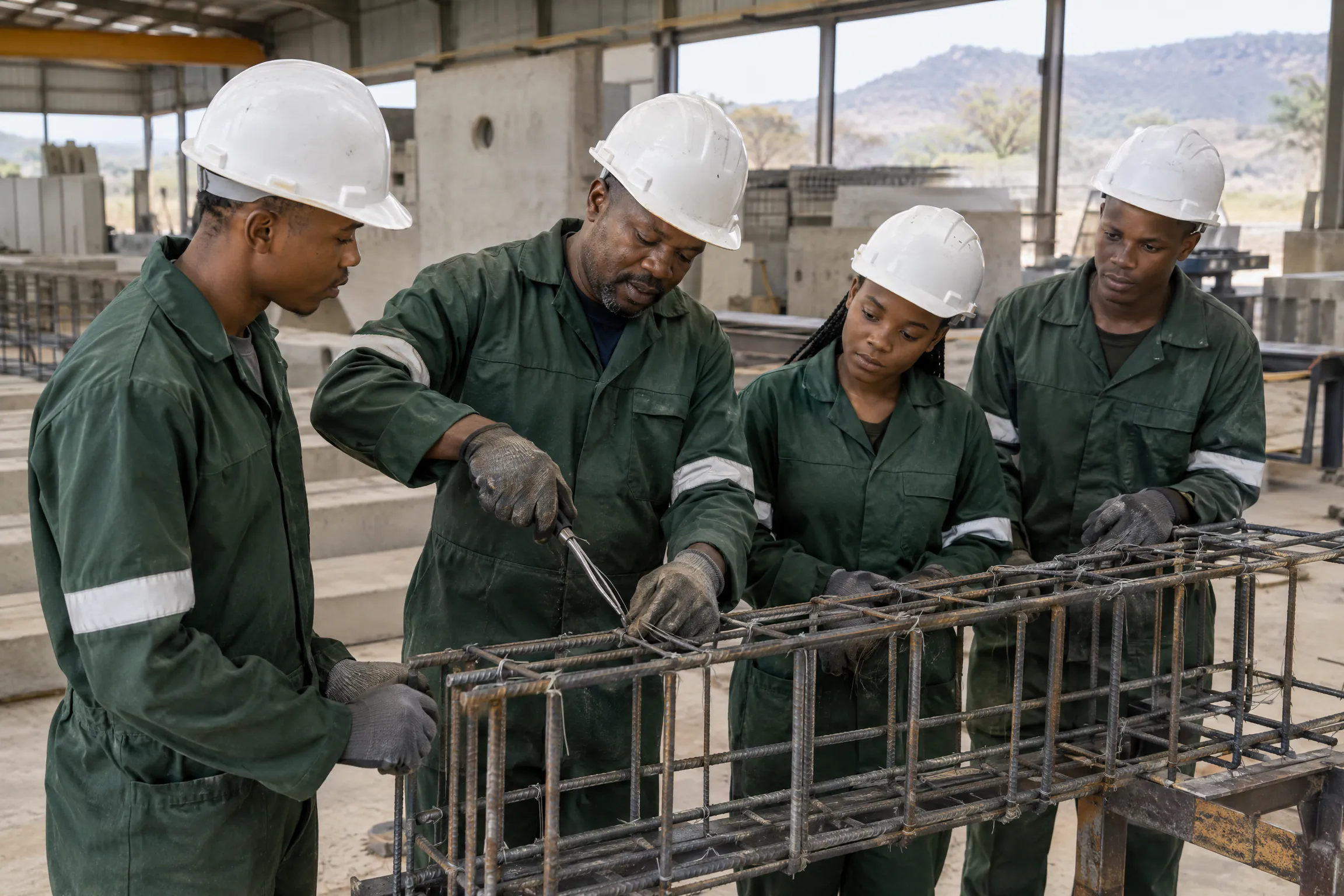
That matters where we are building. Unemployment in Limpopo stood at 34.6% in the second quarter of 2026. Our plan is to recruit locally against published criteria and to train through a dedicated skills programme, the Precast Africa Academy, which is a proposal at this stage. We will report on both when they are real, not before.
- 34.6%
- Unemployment in Limpopo, Q2 2026
Source: Stats SA Quarterly Labour Force Survey, Q2 2026
04
Governance: one accountable party is an ESG feature
Many governance failures in construction are interface failures. Responsibility sits between two contracts, the record of who decided what is incomplete, and by the time a question is asked the people who could answer it have left site. The more parties in the chain, the more places an audit trail can break.
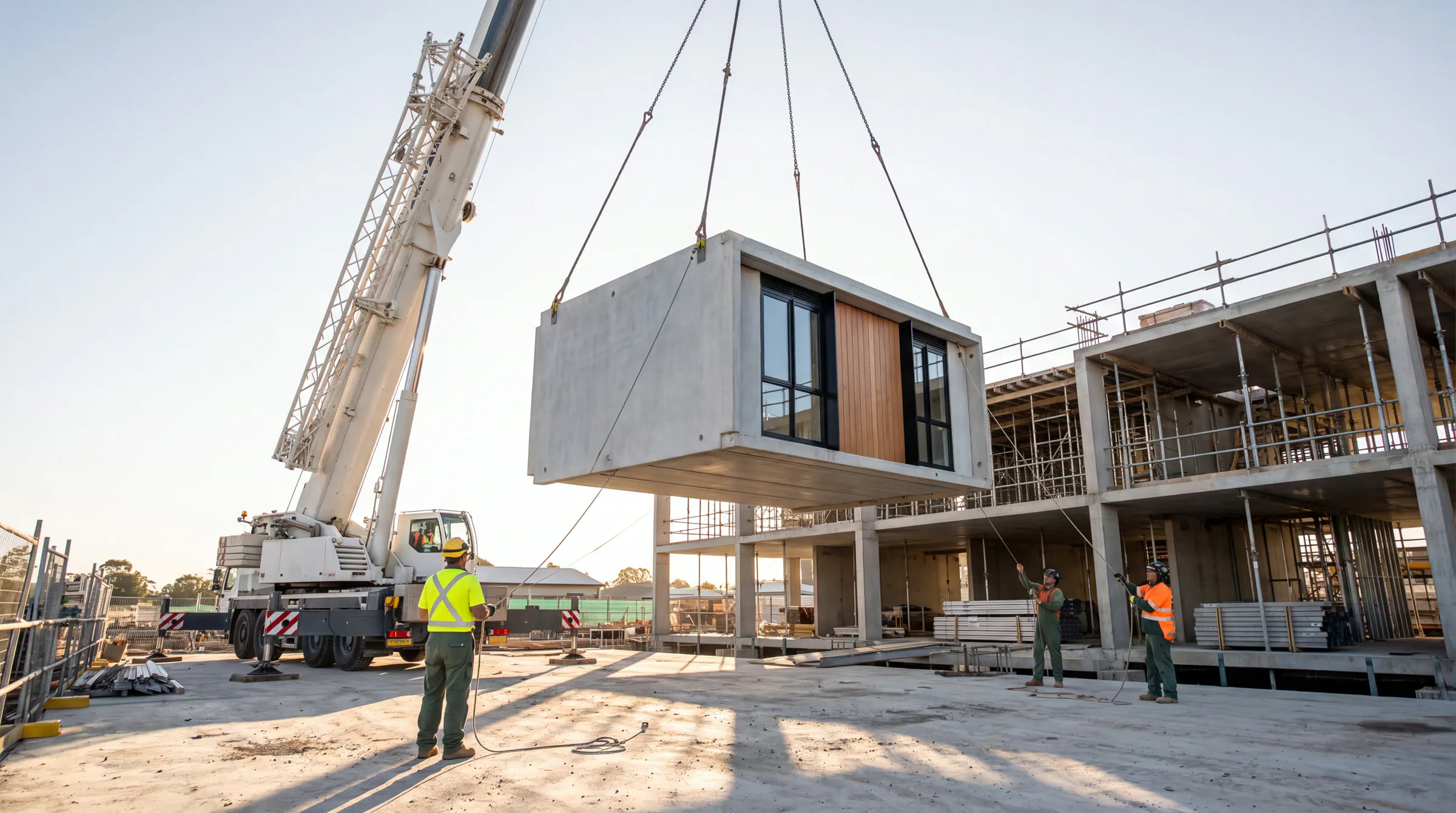
Carrying the module from mould to foundation under one accountable team is usually presented as a delivery advantage. It is equally a governance one: one quality regime, one set of records, and a module passport that documents each unit's materials, inspections and tests at the point they happen.
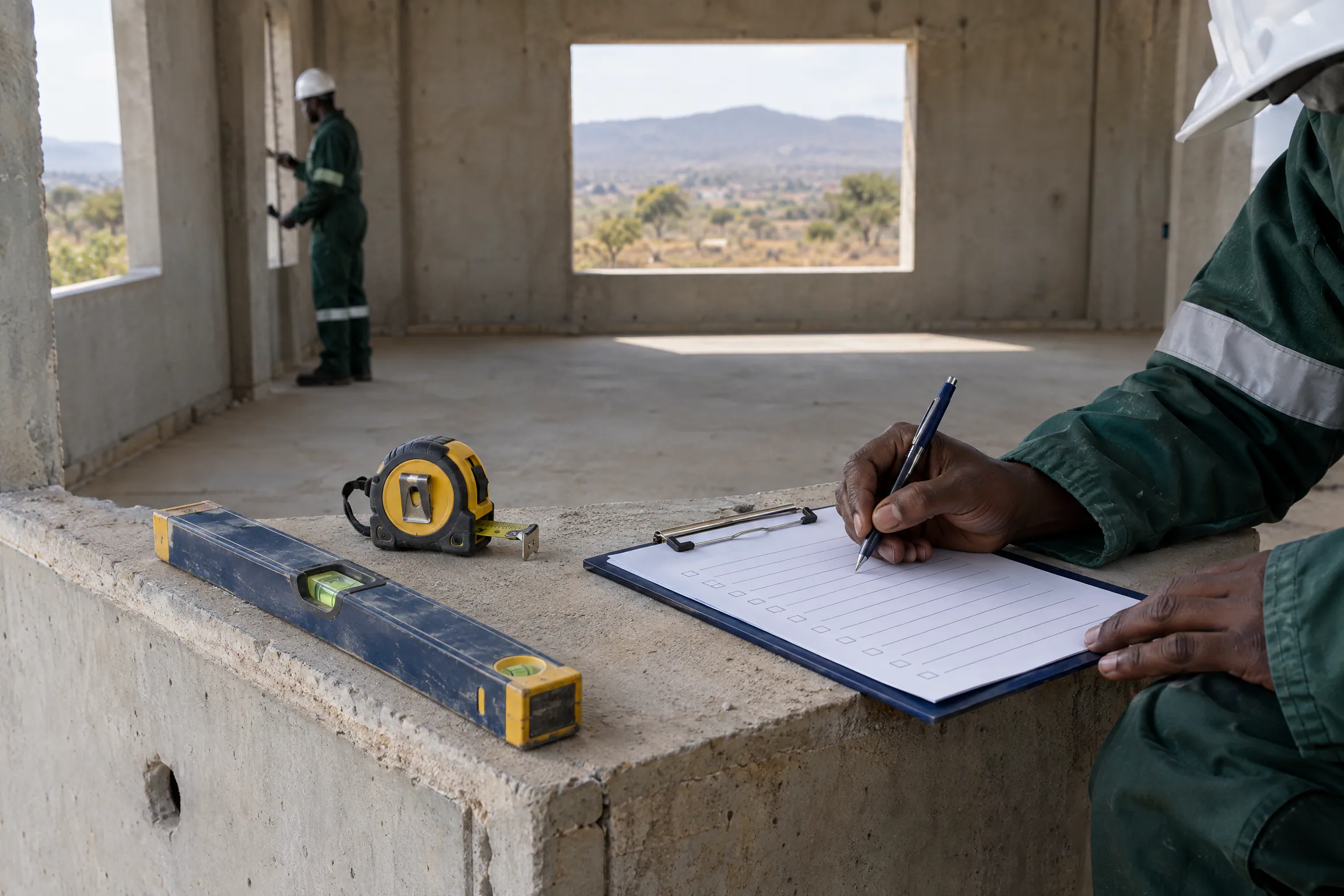
05
What we can evidence today, and what we cannot
An article about auditable claims should be careful about its own. Precast Africa has not yet delivered a project, so there is no measured operating record to publish: no realised carbon figure, no waste return, no safety history. Anything presented as one would not survive technical due diligence, and we would rather say so here.
What exists today is the design of the measurement. We intend to report, per module, embodied carbon and cement content, waste, water and energy, defects at release and safety incidents, from the first production run rather than once there is something flattering to report. We also plan to provide developers with the material and carbon data they need to pursue green-building certification such as EDGE.
What we intend to report, from the first production run
Per module
- Embodied carbon and cement content
- Waste
- Water and energy
- Defects at release
- Safety incidents
For developers
- Material and carbon data for green-building certification such as EDGE (planned)
For a funder applying an ESG test, that distinction is the point. The useful question to ask of any construction counterparty is not what they claim to have achieved, but whether their process is capable of producing an honest answer at all.
Imithombo
Precast Africa has no delivered project and claims no operating ESG performance. Indicators described here are those we intend to measure from the first production run. Proposals (such as the Academy and an EDGE data pack) are subject to approval and funding. Images are artist's impressions.