In 2025/26 the state set out to deliver 37,779 subsidised homes. It delivered 23,027, about 61% of its own target. For 2026/27 the target is 39,058. In September 2026 the Minister of Human Settlements put the number of households needing housing assistance at more than 2.3 million.
Subsidised homes
- 2025/26 target37,779
- 2025/26 delivered23,027
- 2026/27 target39,058
Source: Department of Human Settlements, Budget Vote 2026/27 speech, 27 May 2026
South Africa does not lack plans. Integrated development plans, provincial pipelines and municipal frameworks exist. It does not lack need. What it lacks is the capacity to turn plans into finished homes at the pace need requires. The constraint is delivery, and delivery depends on method.
The gap is not a shortage of need. It is a shortage of method.
01
Budgets are tightening, so each rand must build more
The Department of Human Settlements' budget for 2026/27 is about R27bn, with R2.9bn moving over the medium term from the main housing grant to informal settlement upgrading. With less money per year, the question is not only how many homes a budget can fund, but how quickly and predictably each rand turns into a home that lasts.
- ≈R27bn
- Department of Human Settlements budget, 2026/27
- R2.9bn
- Moving from the main housing grant to informal settlement upgrading, medium term
Source: Department of Human Settlements, Budget Vote 2026/27 speech, 27 May 2026

The same pattern shows up locally. In Fetakgomo-Tubatse in Limpopo, where we plan our first factory, the municipality's own planning documents put its delivery capacity at about 600 subsidised houses a year against a need of about 5,000.
Fetakgomo-Tubatse, subsidised houses a year
- Delivery capacity≈600
- Need≈5,000
Source: Fetakgomo-Tubatse Local Municipality IDP 2026/27, as cited in Precast Africa's 2026 business plan
02
Policy has started to name the method
In February 2026 the department and the National Home Builders Registration Council (NHBRC) hosted a national summit on innovative building technologies (IBT). The Minister later described it as "the end of experimentation and the beginning of implementation". A consolidated IBT implementation plan has been approved, and work is under way to bring IBT into the national housing code and its norms and standards.
The budget allows at least 2% of the main housing grant to be allocated to IBT projects. Allocation has lagged policy. In August 2026 Parliament's portfolio committee noted that only the Eastern Cape had met the 2% level for 2026/27, and that several provinces had allocated nothing. The committee called for the policy, regulation and funding to make IBT mainstream.
From experimentation to implementation
At least 2% of the main housing grant may be allocated to IBT projects.
- Feb 2026
National IBT summit
Hosted by the department and the NHBRC.
- 2026
Consolidated IBT implementation plan approved
Work under way to bring IBT into the national housing code.
- Aug 2026
Portfolio committee reports
Only the Eastern Cape had met the 2% level for 2026/27.
Our reading is constructive. Provinces will allocate to new methods when those methods arrive with certification, evidence and delivery capacity they can rely on. The burden of proof sits with the industry, and that is where it should sit.
03
What industrialised construction changes
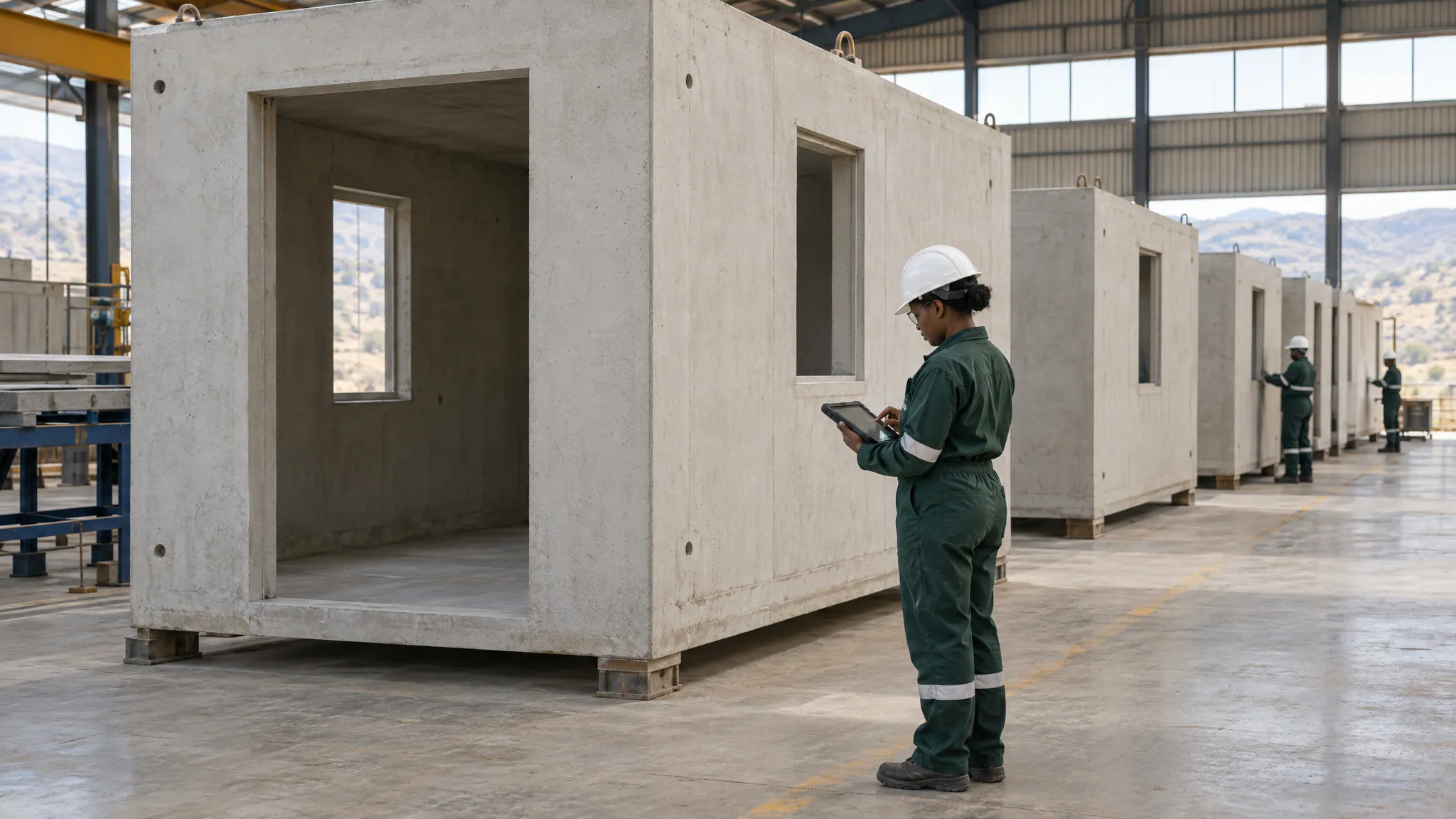
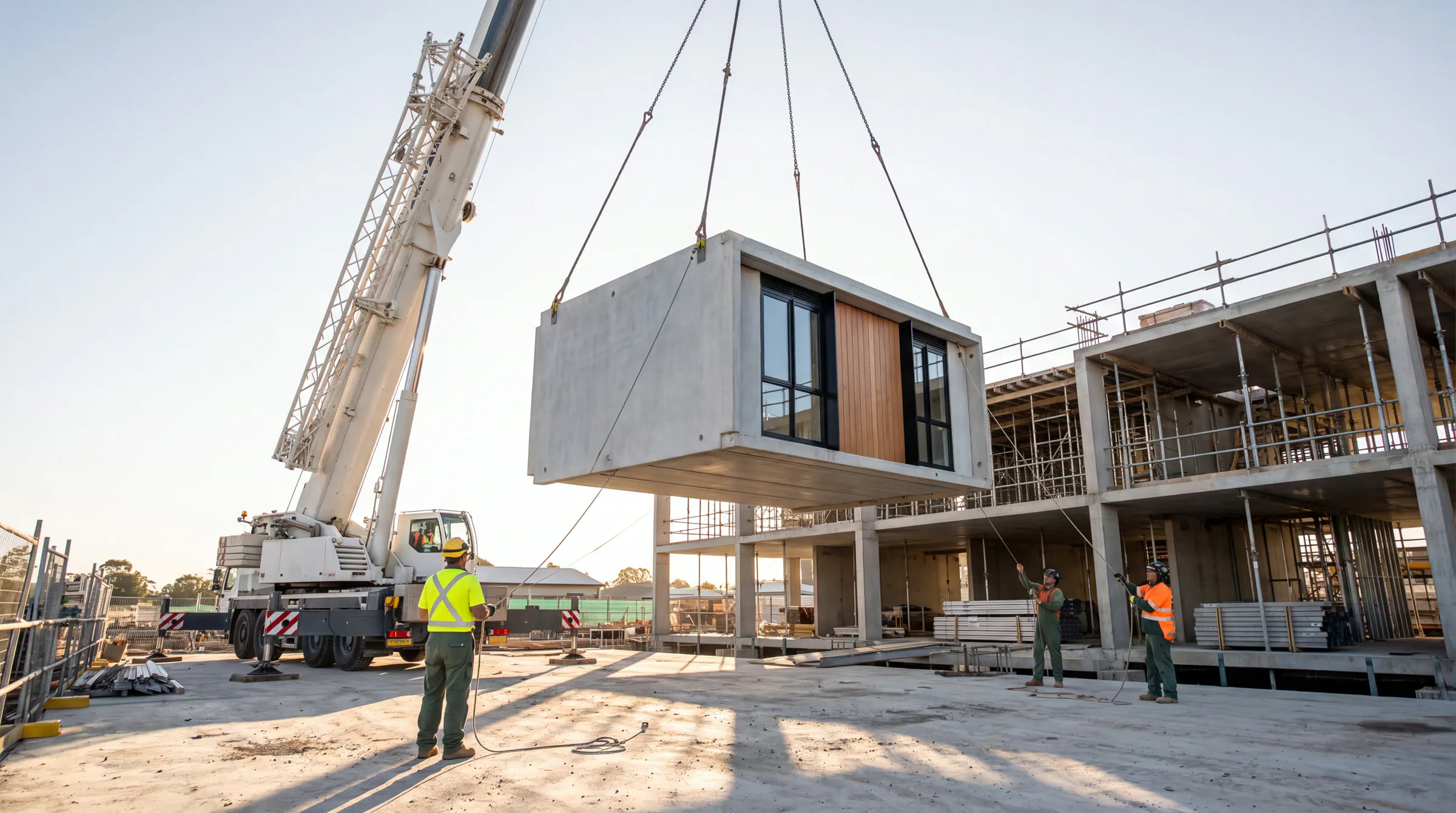
Factory production changes what limits output. On a building site, output depends on how many skilled crews can work at once and on what the weather allows. In a factory, output depends on equipment, process and a disciplined supply of designs and sites. The repeatable part of the building is made under control, while foundations and services proceed in parallel.

This is not a theoretical argument. Singapore has required prefabricated prefinished volumetric construction on selected government land sales since 2014, and its building authority reports manpower and time savings of up to 40% on such projects. Hong Kong has used its equivalent, modular integrated construction, on more than 100 projects and requires manufacturers to be accredited before they bid for public work. Neither is South Africa, and their results are not ours. What both show is that policy, certification and manufacturing discipline together can change how a country builds.
04
What it does not change
A new method does not remove the other constraints on delivery. Land still needs rights, bulk services still need capacity, and homes still need funding and beneficiaries. Industrialised construction addresses one link in the chain, the construction of the structure. That link happens to be the one where time and quality are most often lost.
It also has to earn acceptance. In South Africa, a building system outside the conventional standards needs certification by Agrément South Africa before homes built with it can be enrolled with the NHBRC and occupied. That is a demanding process, and it should be.
05
Why now
Three conditions point to the next few years. Policy has moved from experimentation to implementation. Higher interest rates and scarce skills have raised the cost of slow, uncertain programmes. And new economic zones, such as the Fetakgomo-Tubatse special economic zone designated in May 2026, are creating concentrated demand for homes where people will work.
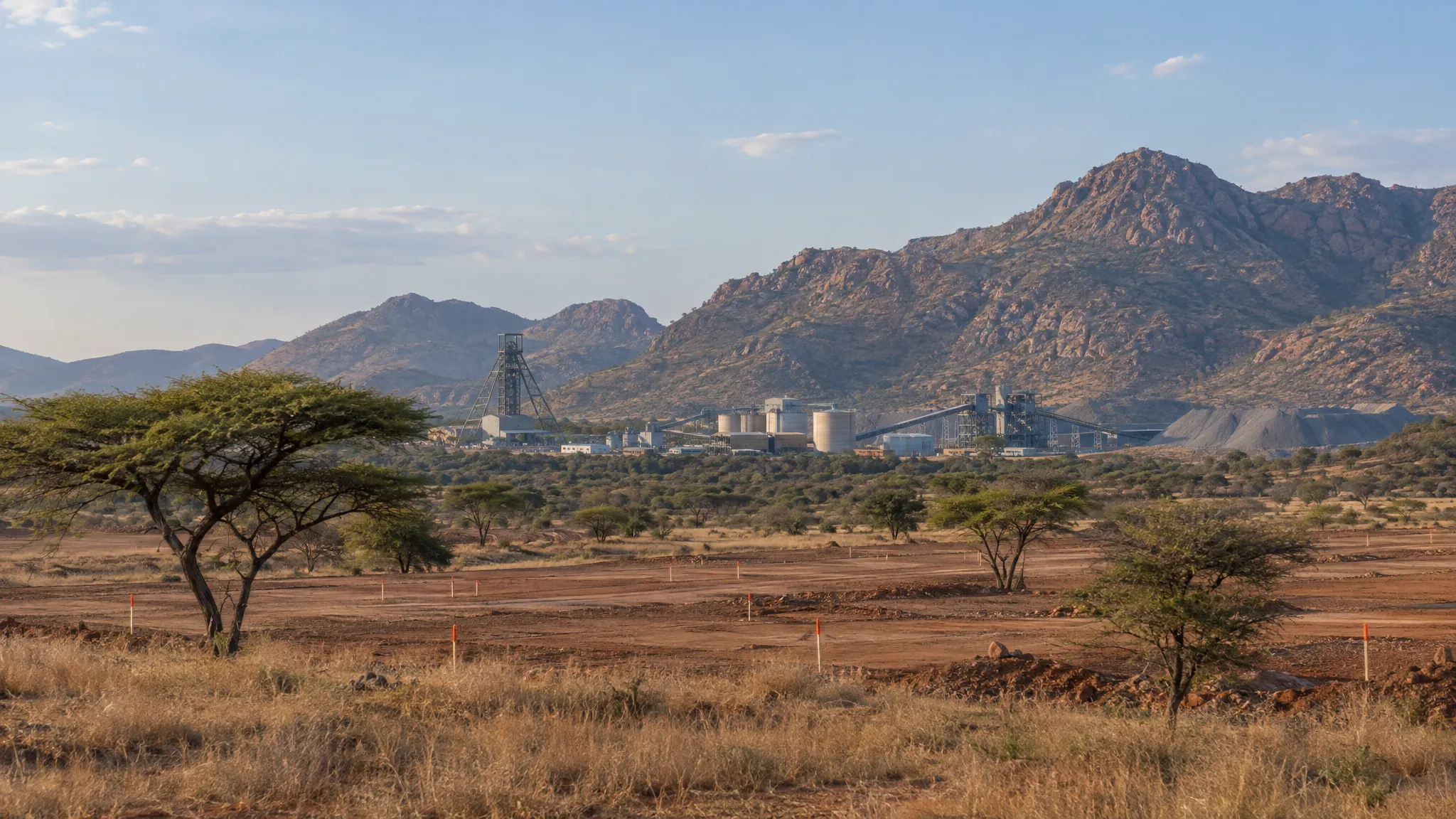
What remains is execution: building the first factory, certifying the system, delivering the first homes and letting the evidence do what argument alone cannot. That is the work Precast Africa was formed to do. You can read how we got here in our story.
Sources
Statistics are sourced below and dated. International experience is cited as context, not as Precast Africa results. Images are artist's impressions.
- Department of Human Settlements, Budget Vote 2026/27 speech, 27 May 2026
- IOL, 'What Minister Simelane's budget vote reveals about South Africa's housing challenges', 28 May 2026
- IOL, 'Simelane says more than 2.3 million households need housing assistance', 25 September 2026
- Parliament of South Africa, Portfolio Committee on Human Settlements media statement, 26 August 2026
- NHBRC, IBT Summit 2026 announcement, 23 January 2026
- Singapore Building and Construction Authority, PPVC
- Hong Kong SAR Government press release on Modular Integrated Construction, 23 June 2025
- Fetakgomo-Tubatse Local Municipality IDP 2026/27 (as cited in Precast Africa's 2026 business plan)