South African property development has always been a timing game. Buy land, secure approvals, build, then sell or let, and hope the interest rate and the construction programme do not drift far enough apart to erode the margin. For a long time conventional construction suited that game: labour was available, materials were predictable and a late programme was an inconvenience rather than a threat.
Three things have changed, and each one shows up in the numbers.
01
Money costs more, so time costs more
On 23 September 2026 the Reserve Bank raised the repo rate by 25 basis points to 7.25%, taking prime to 10.75%. Development finance is drawn and repaid against a programme. When rates rise, every month a building spends under construction carries more interest against an asset that is not yet earning.
- 7.25%
- Repo rate, up 25 basis points
- 10.75%
- Prime lending rate
Source: South African Reserve Bank MPC statement, 23 September 2026
That changes the question a developer asks of a building method. It is no longer only "what does it cost to build?" but "how confident can I be in the date?"
The question is no longer only what a building costs to build. It is how confident you can be in the date.
02
Confidence is low, and the pipeline is growing
The market is sending mixed signals. The Afrimat Construction Index rose 5% quarter on quarter in the second quarter of 2026, and the project pipeline it tracks reached about R396bn, up 71%. At the same time, the FNB/BER Building Confidence Index stood at 40 in the third quarter, below the neutral mark of 50, with residential builders reporting weaker conditions.
- +5%
- Afrimat Construction Index, Q2 2026, quarter on quarter
- ≈R396bn
- Project pipeline tracked, up 71%
- 40
- FNB/BER Building Confidence Index, Q3 2026 (neutral is 50)
- +8.3%
- Construction material prices, August 2026, year on year
Source: Afrimat; FNB/BER via Cape Times; Stats SA
Put together, that describes a market with work to do and limited confidence in doing it. Construction material prices were 8.3% higher in August 2026 than a year earlier. Skilled trades remain hard to find and retain. In that environment, the variable a developer most wants to remove is uncertainty.
03
What changes in the feasibility
A conventional feasibility carries programme risk as a contingency, because the programme is understood to be an estimate. That contingency carries financing cost, and the financing cost compounds. That is how a few months of delay becomes a margin problem.
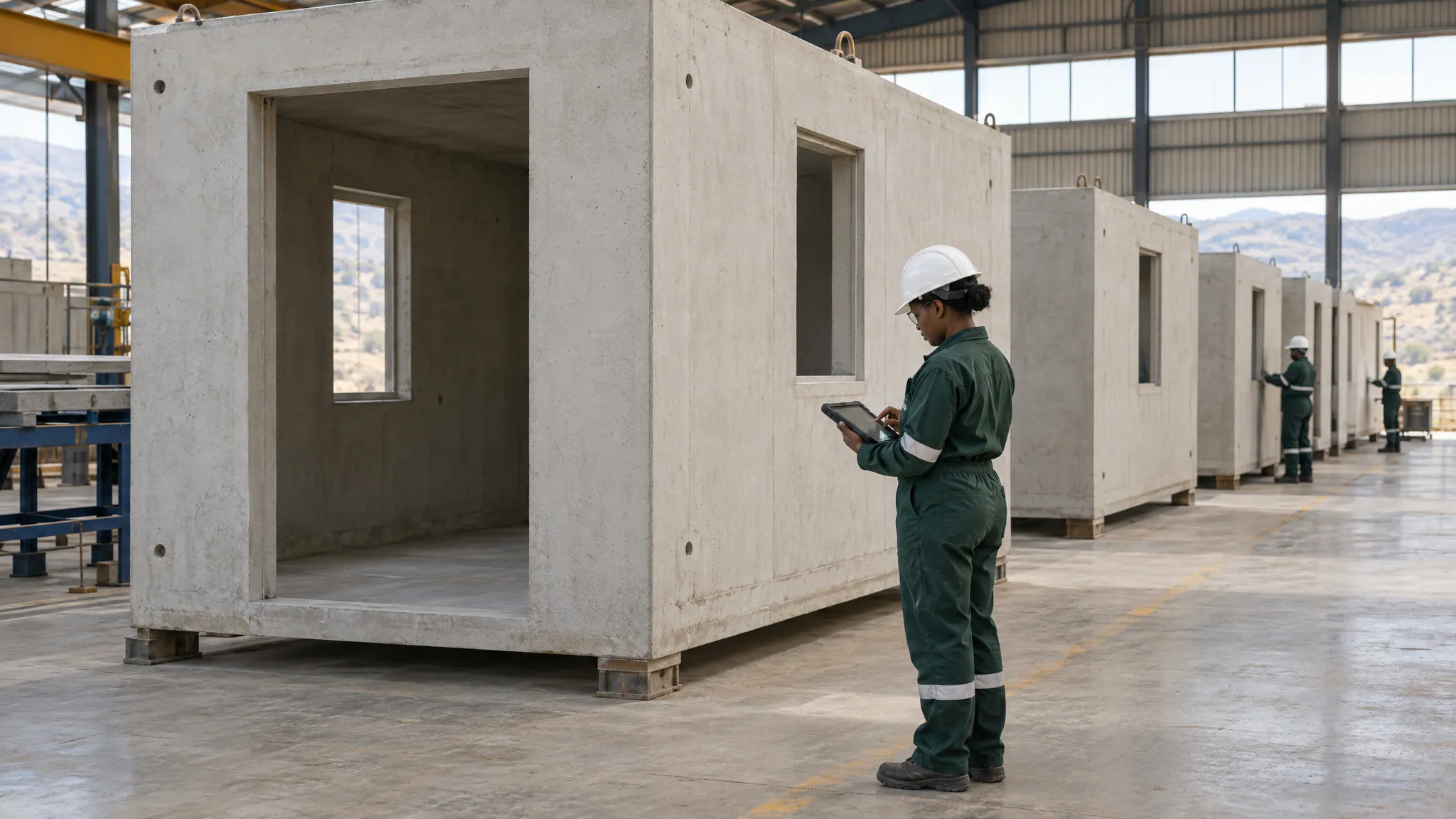
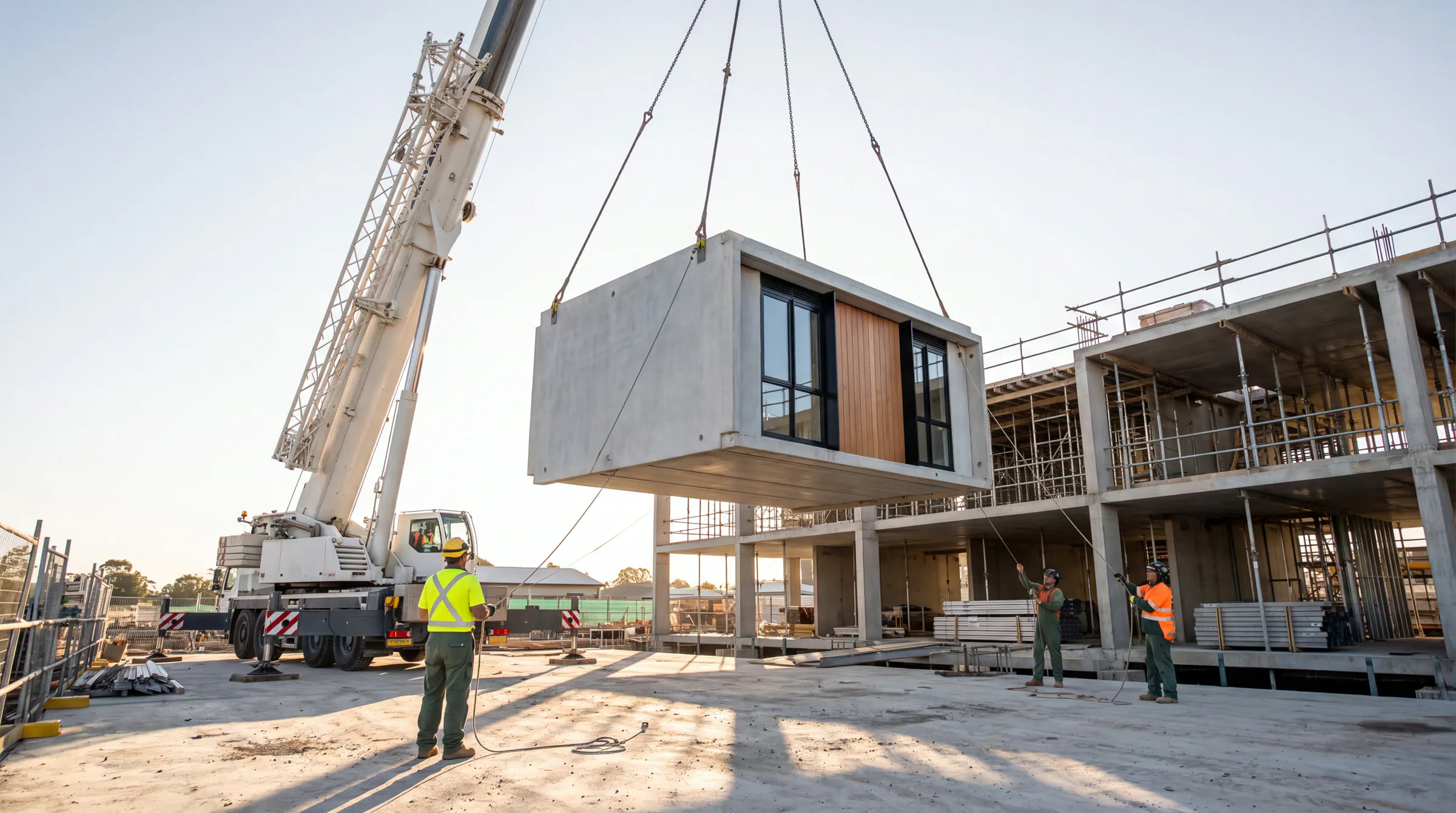
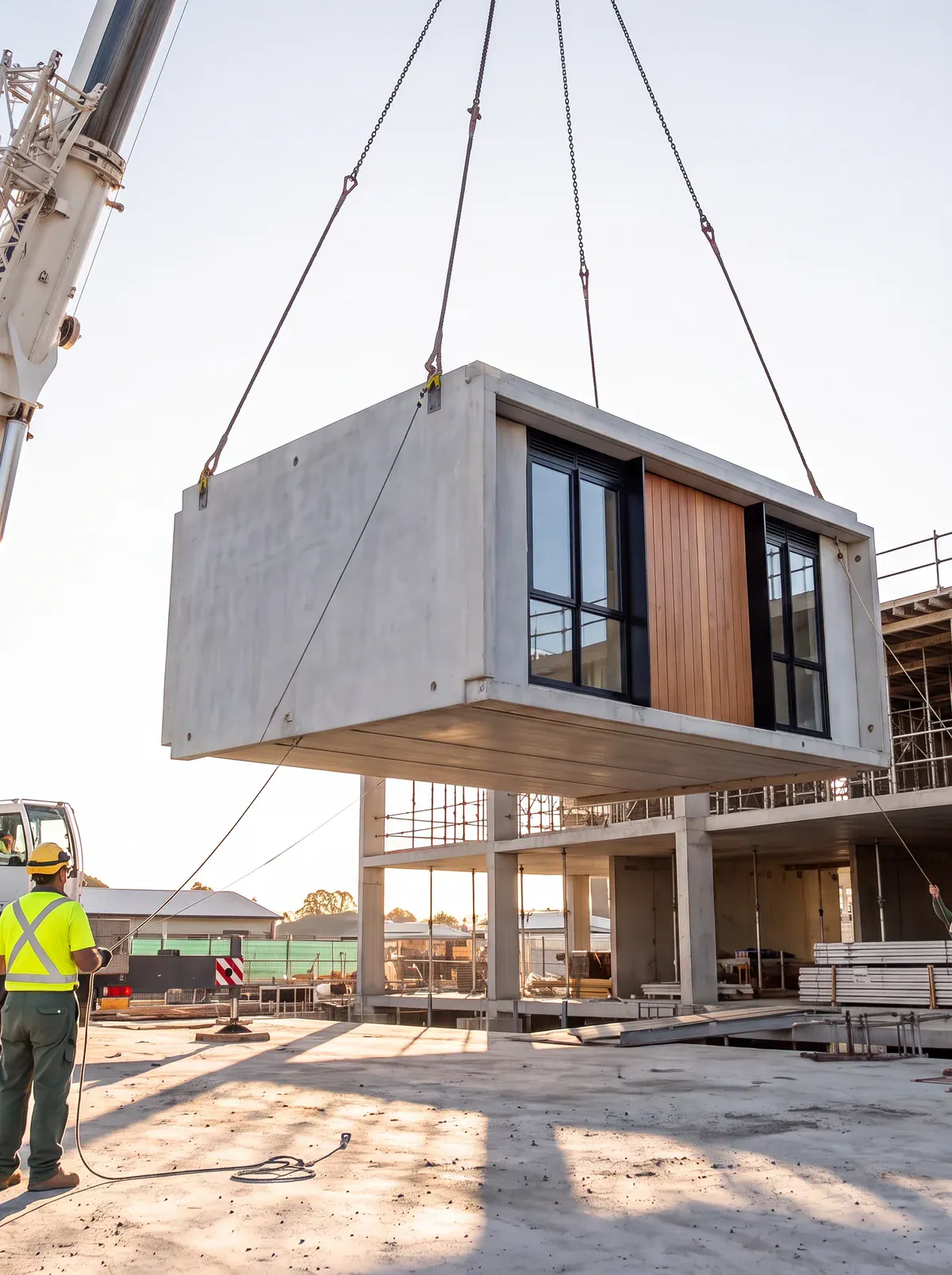
Manufacturing the structure does not remove risk, but it changes where risk sits. Casting moves indoors, so weather and trade sequencing leave the critical path for that part of the building. Foundations and services can proceed while modules are cast. What remains on site is logistics, placement and connection: a shorter and more controllable tail.
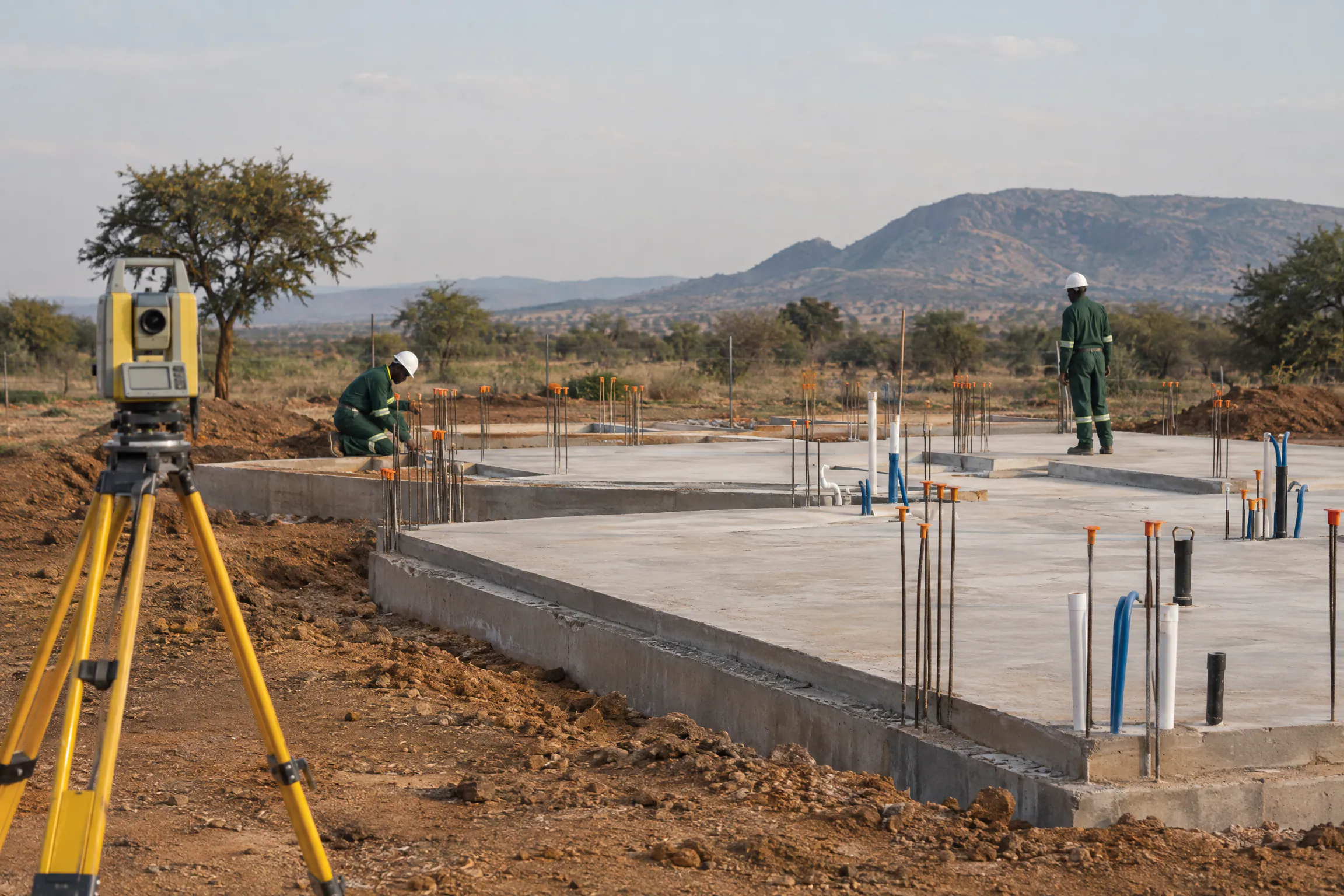
International evidence supports the direction while warning against overstatement. A 2019 McKinsey study found modular construction can shorten schedules by 20% to 50% when it is done well, and that poorly executed modular projects can cost more than conventional ones. The method is not a guarantee. The discipline around it is what delivers the result.
04
What does not change
Factory-built concrete is not a shortcut around design or approvals. It asks more of the developer early, not less: a design frozen before casting begins, a site certified ready before modules are dispatched, and payments tied to production milestones. Developers who already plan this way will find the transition natural. Those who rely on resolving design on site will find it demanding.
What it asks of the developer, early
Before casting
- A design frozen
Before dispatch
- A site certified ready
Throughout
- Payments tied to production milestones
Nor is it, on its own terms, a cheaper way to build. We do not claim that our modules cost less than conventional construction. Our case rests on programme, quality and certainty, the things a feasibility pays for when they are missing.
05
Where it fits first
The fit is strongest where units repeat and dates matter: estates with standard house types, walk-up rental and social housing, and employers who need permanent accommodation near their operations. In those settings the value of a predictable programme is easiest to see, and the cost of an unpredictable one is easiest to count.
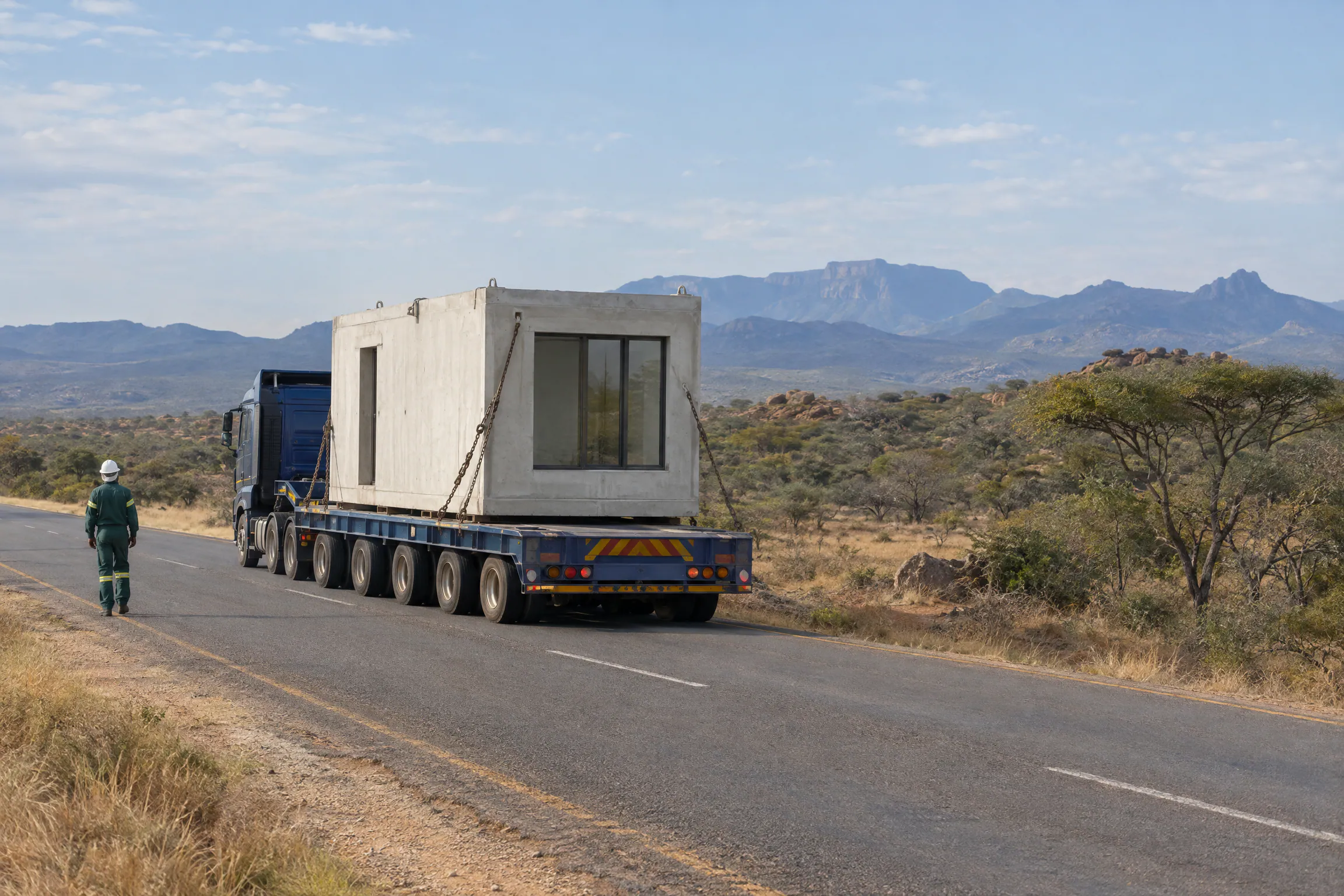
We are building our first factory to prove that case with evidence, starting in Limpopo. When we have measured results, we will publish them here.
Sources
Market data is sourced below. International figures are benchmarks, not Precast Africa results. No cost saving is claimed. Images are artist's impressions.
- South African Reserve Bank MPC statement, 23 September 2026 (via STBB)
- Afrimat Construction Index, Q2 2026, 21 September 2026
- FNB/BER Building Confidence Index, Q3 2026 (via Cape Times, 11 September 2026)
- Stats SA, Construction Materials Price Indices, August 2026
- McKinsey & Company, 'Modular construction: From projects to products', June 2019